Showing posts with label Heroes. Show all posts

Wednesday, August 15, 2012

Choosing the Representation


And welcome back everyone. In this post, I'm going to round up some numbers and figure out how America's demographics breakdown for our super representatives.

Choosing The Supers 

The supers chosen have been selected to reflect US demographics for 2012 (or as close as can be obtain). Data used for this is from The CIA World Fact Book (which is worth a look through in itself for the interesting bits it has on all the various countries) and the Wikipedia page on US Demographics, leading to the following relevant numbers:

  • Total population: 313.85 million people (Third largest in the world after China and India) 
  • Approximately 207.6 million eligible voters 
  • Age Structure: 
    • 0-14 years: 20.1% (32.1 million male, 30.8 million female) 
    • 15-64 years: 66.8% (104.4 million male, 104.8 million female) 
    • 65+ years: 13.1% (17.7 million male, 23.4 million female) 
  • Ethnic diversity/ancestry: 
    • European: 63.7% (199.9 million) 
    • Hispanic: 16.3% (51.1 million) 
    • African: 12.2% (38.3 million) 
    • Asian: 4.7% (14.8 million) 
    • Amerindian or Alaskan native: 0.97% (3 million) 
    • Native Hawaiian or other Pacific islander: 0.18% (0.6 million) 
    • Two or more: 1.61% (5.1 million) 
  • Religions: 
    • Protestant: 51.3% (161 million) 
    • Roman Catholic: 23.9% (75 million) 
    • Jewish: 1.7% (5.3 million) 
    • Mormon: 1.7% (5.3 million) 
    • Other Christian: 1.6% (5 million) 
    • Buddhist: 0.7% (2.2 million) 
    • Muslim: 0.6% (1.8 million) 
    • Hindu: 0.4% (1.3 million) 
    • Other/Unspecified 2.1% (6.6 million) 
    • Unaffiliated: 12.1% (3.8 million) 
    • None: 4% (1.4 million) 
  • Primary Language: 
    • English: 82.1% (257.7 million) 
    • Spanish: 10.7% (33.6 million) 
    • Other Indo-European: 3.8% (11.9 million) 
    • Asain or Pacific island: 2.7% (8.5 million) 
    • Other: 0.7% (2.2 million) 
  • Approximately 82% of the total population live in urban areas 
  • 10 largest cities are: 
    • New York-Newark: 19.3 million people (6.1%) 
    • Los Angeles-Long Beach-Santa Ana: 12.95 million people (4.1%) 
    • Chicago: 9.5 million people (3%) 
    • Dallas: 6.5 million people (2.1%) 
    • Houston: 6.1 million people (2%) 
    • Philadelphia: 6 million people (1.9%) 
    • Washington DC: 5.7 million people (1.8%) 
    • Miami: 5.67 million people (1.8%) 
    • Atlanta: 5.4 million people (1.7%) 
    • Boston: 4.6 million people (1.4%) 
  • Life expectancy of 76 years for men, 81 years for women 
  • Fertility rate of 2.06 children per woman 
  • HIV/AIDS prevalence of 0.6% (1.2 million people) 
  • Literacy rate, those over 15 who can read and write, 99% 
  • Average school life expectancy, 15 years for males, 17 years for females 
  • Obesity adult prevalence rate is 33.9% (106.4 million), average man weighed 194.7 pounds (88.3 kg); the average woman 164.7 pounds (74.7 kg). 
  • Labor force (153.6 million people) by occupation: 
    • Managerial, professional and technical: 37.3% (117.1 million) 
    • Sales and office: 24.2% (76 million) 
    • Manufacturing, extraction, transportation and crafts: 20.3% (63.7 million) 
    • Farming, Forestry and Fishing: 0.7% (2.2 million) 
    • Other Services: 17.6% (5.5 million) 
  • Unemployment rate: 9% (28.3 million) 
  • Population below poverty line: 15.1% (47.4 million) 
  • Household annual income distribution: 
    • Bottom 10%: $0-$10,500 
    • Bottom 20%: $0-$18,500 
    • Bottom 30%: $0-$22,500 
    • Middle 33%: 30,000-$62,500 
    • Middle 20%: $35,000-$55,000 
    • Top 25%: $77,500+ 
    • Top 20%: $92,000+ 
    • Top 5%: $167,000+ 
    • Top 1.5%: $250,000+ 
    • Top 1%: $350,000+ 
  • Social class percentages 
    • Upper class: 1% (3.1 million, Top-level executives, celebrities, heirs; income of $500,000+ common. Ivy league education common.) 
    • Upper Middle class: 15% (47.1 million, Highly-educated (often with graduate degrees) professionals & managers with household incomes varying from the high 5-figure range to commonly above $100,000.) 
    • Lower Middle class: 32% (100.4 million, Semi-professionals and craftsmen with some work autonomy; household incomes commonly range from $35,000 to $75,000. Typically, some college education.) 
    • Working class: 32% (100.4 million, Clerical, pink- and blue-collar workers with often low job security; common household incomes range from $16,000 to $30,000. High school education.) 
    • Lower class: 20% (62.8 million, Those who occupy poorly-paid positions or rely on government transfers. Some high school education.) 
  • People with internet: 245 million (78%) 
  • Less than 1% of Americans currently serve in the Armed Forces (less than 3.1 million people) 
  • There are 22.1 million Veterans (7.04%) 
  • Felons denied to right to vote: 5.3 million (2.42%) 
  • 4.1% of Americans aged 18-45 identify as gay, lesbian or bisexual (12.9 million) 
So how does all this translate into superheroes? Well, I'm going to use 20 supers to represent the entire population of eligible voters, so each super will represent 5% of those possible voters, or 10.4 million American (and you though there was a lot on their shoulders before!). So this means that for the supers to be pure representations, there must be:
  • Ages: 8 will be 18-40, 9 will be 41-64, 3 with ages 64+ of which 1 will be male, 2 will be women 
  • Sex: 10 will be men, 10 will be women 
  • Races: 13 Europeans, 3 Hispanics, 2 Africans, 1 Asian, 1 Other 
  • Religions: 10 Protestants, 5 Roman Catholics (Protestants and Roman Catholics may be substituted with general Christan), 2 Unaffiliated, 1 Atheist, and we'll say 1 Jewish and 1 Mormon/Other? 
  • First Languages: 16 English, 2 Spanish, 1 Asian, 1 Other Indo-European 
  • 16 will live in Urban areas, of which 2 will be from New York, 1 from Los Angeles, 1 from Chicago, and 1 from Texas 
  • Labor force, or what does their secret identity do: 10 won't have day jobs, 4 Managerial, professional and technical, 2 in sales, 2 in manufacturing, 2 in others 
  • Social class: 1 Upper class, 3 Upper Middle class, 6 Lower Middle class, 6 Working class, 4 Lower class of which 3 would live below the poverty line 
  • 16 would have the internet 
  • 7 will be Obese 
  • 2 will have military backgrounds 
  • 1 will be gay 
As some of you can no doubt guess, getting an exact match for all of these will be difficult, given the general portrayal of supers (well off middle aged white guys), but I'm going to work out the last few knots in my list before posting it in the next day or two. In the meantime, feel free to post your own ideas about who should be included! They may help me work out a better list.

~James

In the Beginning...


Hello visitors, and welcome to Super Politics!

Super Politics is my blog where I will summarize where the US Presidential and Vice-Presidential candidates for the 2012 US election stand on various issues, and then try to figure out which stand various Superheroes, and a few Supervillians (I want a mix that will closely reflect current demographics in the United States), would support, since knowing exactly who supports what can be difficult to figure out, especially when there are somethings where two candidates have the same opinion, so this seemed like a fun and amusing way to figure that all out. Plus I kind of wanted to know myself how each candidate is different and which heroes would vote for who, and figured while I was trying to figure that out for myself, I'd post it online in case anyone else wanted to know.

This idea was inspired by the io9 article "How would Batman Respond to Occupy Wall Street?", and it's one I've been looking at for a while since I think it's a very interesting idea, so with Mitt Romney announcing his running mate this past weekend this seemed like the best time to start. I intend to have an update online every Wednesday morning, and provide as accurate a reflection of the candidates' position as possible with citations for everything. I can't promise I'll cover every issue, but I do hope to cover all the big issues in this election (the economy, health care, immigration, etc).

Let me say upfront that I am not an expert on American Politics or Superheroes, but I am well versed enough in both to not look like an idiot in conversations about either. Thus the reason I'm doing this, to become better versed in both. That said, if any of you kind readers are experts on either subject and notice a mistake on my part, please let me know. This blog is suppose to be informative, and a mistake will only permeate.

So without further ado, let's meet out players!

The Candidates

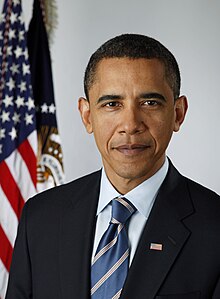
Barack Obama
Born August 4, 1961, he is the current President of the United States of America and member of the Democratic Party. A graduate of Columbia University and Harvard Law School, he worked as a civil rights attorney in Chicago and taught constitutional law at the University of Chicago Law School from 1992 to 2004. He also served three terms representing the 13th District in the Illinois Senate from 1997 to 2004. In 2004 he was elected to to the US Senate as the representative of Illinois until he stepped down in 2008 after being elected president.
As president, has seen several major milestones come to pass either through his own actions or those of his party, including but not limited to several economic stimulus legislation acts, the repeal of "Don't Ask, Don't Tell", the ending of US military involvement in the Iraq War, signing the NewSTART arms control treaty with Russia, and order the military operation that resulted in the death of Osama bin Laden. For more information, see Obama's Wikipedia page, or his personnel website, BarackObama.com.

Joe Biden
Born November 20, 1942, he is the current Vice President of the United States of America and member of the Democratic Party. He became an attorney in 1969 and was elected to a county council in 1970. He was then elected to the Senate in 1972 as the representative from Delaware, a position he held until he resigned following his election to the Vice Presidency. During his time in the Senate Biden was a long-time member and a chairman of the Foreign Relations Committee and his advocacy helped bring US military assistance and intervention during the Bosnian War. He has served as the chairman of theSenate Judiciary Committee and led the creation of the Violent Crime Control and Law Enforcement Act and Violence Against Women Act.
As Vice President, Biden has been heavily involved in Obama's decision-making process and held the oversight role for the infrastructure spending from the Obama stimulus package. His ability to negotiate with Congressional Republicans has played a key role in bringing about several bipartisan deals of the Obama administration.
For more information, see Biden's Wikipedia page, or his White House web page.

Willard Mitt Romney
Born March 12, 1947, he is the presumptive nominee of the Republican Party for President for the 2012 election and current Governor of Massachusetts. In 1971 he earned a Bachelor of Arts from Brigham Young University and in 1975 earned a joint Juris Doctor and Master of Business Administration from Harvard University. He entered the management consulting industry, which in 1977 led to a position at Bain & Company, eventually becoming CEO before co-founding the spin-off Bain Capital, a private equity investment firm that has become one of the largest such firms in the US, and he now has a net worth estimated to be between $190-250 million. He is very active in The Church of Jesus Christ of Latter-day Saints, more commonly known as Mormonism. In 1999 he was hired as President and CEO of the Salt Lake Organizing Committee for the 2002 Winter Olympics and Paralympics. He was elected Governor of Massachusetts in 2002 but did not seek re-election in 2006. During his term he presided over the elimination of a projected $3 billion deficit by reducing state funding for higher education, cutting state aid to cities and towns, raising various fees, removing corporate tax loopholes, and by benefiting from unanticipated federal grants and unexpected revenue from a previously enacted capital gains tax increase. He signed into law the Massachusetts health care reform legislation, the first of its kind in the nation, which provided near-universal health insurance access via state-level subsidies and individual mandates to purchase insurance. He ran for the Republican Presidential nomination in 2008 but lost to John McCain; he tried again in 2012 and won enough caucuses and primaries to be the party's presumptive nominee.
For more information, see Romney's Wikipedia page, or his personnel website, MittRomney.com.

Paul Ryan
Born January 29, 1970, he is Mitt Romney's running mate for his 2012 Presidential election campaign making him the presumptive nominee of the Republican Party for Vice President. He earned a BA degree from Miami University in Ohio, after which he worked as an aide to Senator Bob Kasten of Wisconsin, as legislative director for Senator Sam Brownback of Kansas, and as a speechwriter Representative Jack Kemp of New York. In 1998 he was elected to the House of Representatives succeeding Republican Mark Neumann, and is currently serving his seventh term. He was appointed chair of the House Budget Committee in 2011, and has focused on fiscal policy in addition to proposing privatizing Social Security and replacing Medicare with a voucher program for Americans under 55, all of which were outlined in his series of The Path to Prosperity budget proposals, which stood in contrast with the budget proposals outlined by Barack Obama and the Congressional Progressive Caucus.
For more information, see Ryan's Wikipedia page, or his congressional website, PaulRyan.House.gov. 

Okay, that's it for the candidates. I'm breaking this up into parts over the first week because of how long the introductions are going to be, so check the next post as I start going into the supers that are going to represent the voting public.

~James