For those of you that haven't heard of the growing discussion surrounding the cartoon Shezow, MovieBob has created this summary of the discussion and the issues behind it.

A examination of politics with the help of superheroes, as well as other cool things
Showing posts with label Feminism. Show all posts
Showing posts with label Feminism. Show all posts
Tuesday, June 4, 2013

Sunday, April 21, 2013
Wonder Woman! The Untold Story of American Superheroines Extended Trailer
The crew of "Wonder Woman! The Untold
Story of American Superheroines" have released an extended trailer for the film, which you can watch below, in anticipation of the film's public airing on PBS.
The film talks about the history of Superheroines, particularly Wonder Woman, and the parallels of the feminist movement, and you can read more about the documentary at the film's website.
The film talks about the history of Superheroines, particularly Wonder Woman, and the parallels of the feminist movement, and you can read more about the documentary at the film's website.
Sunday, January 20, 2013
How Hollywood views Men and Women
When Colin Stokes' 3-year-old son caught a glimpse of Star Wars, he was instantly obsessed. But what messages did he absorb from the sci-fi classic? Stokes asks for more movies that send positive messages to boys: that cooperation is heroic, and respecting women is as manly as defeating the villain. (Filmed at TEDxBeaconStreet.)
Monday, December 24, 2012
An Extensive History of Wonder Woman, Supergirl, and Feminism
California State University student Marina Hollon has published a thesis on the history of Wonder Woman and Supergirl and their objectification. From the thesis summary,
"This study argues that comic book publishers, editors, writers, artists, and fans imposed multiple limitations on Wonder Woman’s and Supergirl’s powers and independence. Although Wonder Woman and Supergirl embodied significant liberated characteristics: superpowers, independent lifestyles, higher education, white-collar careers, and financial independence, they were most limited by advertisements aimed at males and were also portrayed as unintelligent women, disempowered, and objectified.
This study compares 242 of Wonder Woman’s and Supergirl’s comics from 1959 to 1984. The plots, images, and letter pages were analyzed in the context of Second Wave Feminism and the Cold War era. This study indicates a change over time from the superheroines’ portrayals of liberation to sexual objectification and the editor’s, writer’s, artist’s construction and fans’ reception of the women’s movement in comic book culture. The present study enhances existing scholarship in the fields of Women’s Studies, Media and Popular Culture Studies, and Sociology challenging popular cultural images of empowered superheroines. Although this study may seem of concern to only a small group of scholars and comic book fans, it should in fact concern anyone who cares about why gender inequity continues to exist. My original contribution shows how the influences of fans’ letters in Wonder Woman and Supergirl and the editors’ responses to the fans’ requests limited the superheroines’ liberated powers and behaviors by encouraging a sexualized style of superheroine art."
The full 163 page thesis can be read here.
Saturday, December 8, 2012
io9 Roundup of Superhero, Political and Futurist Articles, Part 3
Today we've got a roundup of recent, relevant, and few just really cool, articles from the science, science fiction and fantasy blog io9.com.
- Watch the first trailer for the Alan Moore-scripted movie Jimmy’s End
- Remembering Neft Dashlari, Stalin’s utopian ocean city made from oil and steel
- Einstein’s brain was definitely not like the others, scientists say
- When does an animal count as a person?
- The Women of Marvel as James Bond Cover Girls
- Infamous TV pitch Gotham High gets fake trailer
- Despite his own mental illness, Nikola Tesla advocated eugenics for the year 2100
- SNL reveals what happens when Hawkeye runs out of arrows
- Roger Ebert Recounts That One Time His Misogynistic Editor Asked Him to Stop Reviewing Movies with Strong Female Leads
- How materials scientists are about to change the very fabric of the world
- The world’s most beautiful gardens are miracles of geoengineering
Tuesday, December 4, 2012
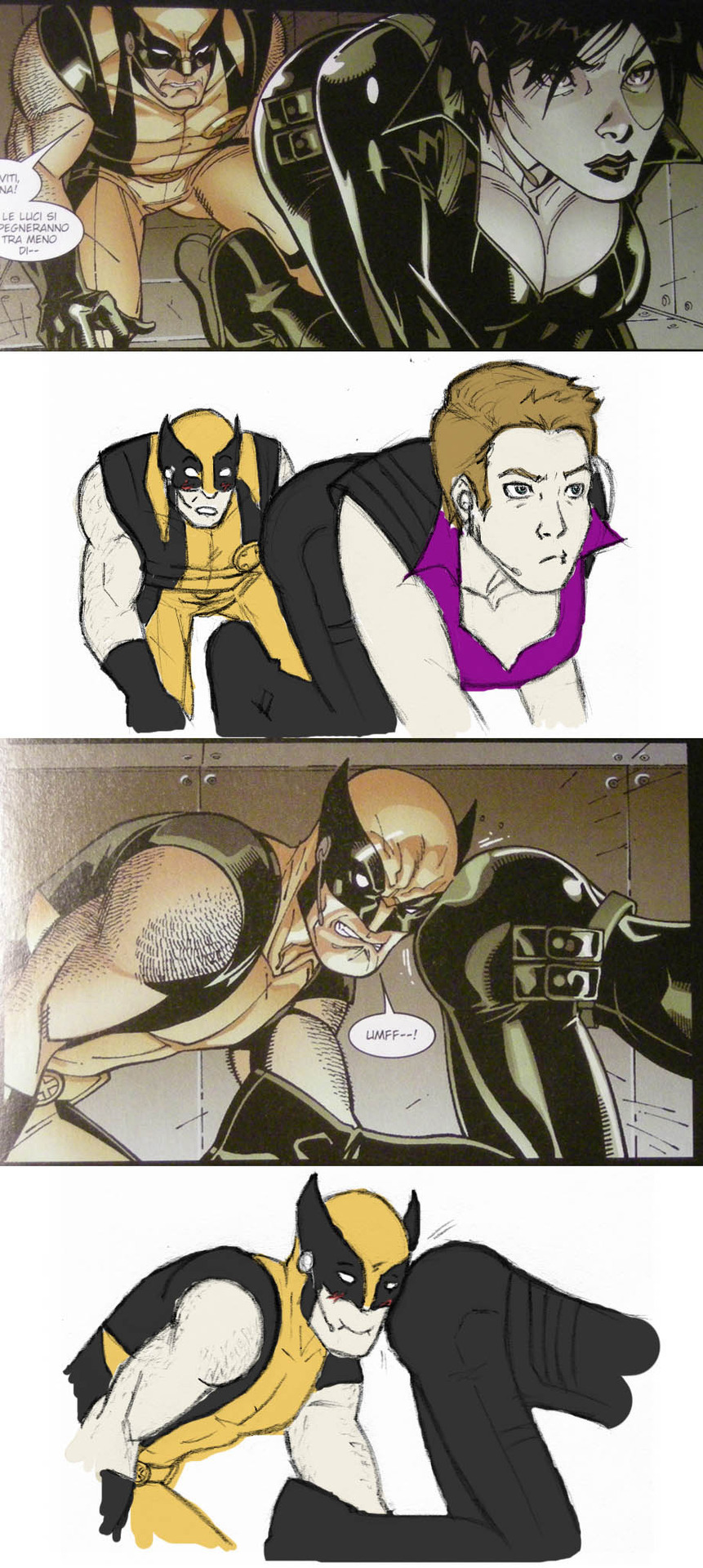
The Hawkeye Initiative


Saturday, November 24, 2012
Wonder Woman! The Untold Story of American Superheroines
There's a new documentary in the works called "Wonder Woman! The Untold Story of American Superheroines" which talks about the history of Wonder Woman and the parallels of the feminist movement, and you can watch the trailer below.
Friday, November 16, 2012
A History of Female Superheroes


From the beginning of superhero comic book history, women were usually delegated to supporting roles, and were usually portrayed as either career women, romance-story heroines, or comedic teenagers.
This all began to change in the 1940s, as part of the growing women's empowerment of the time. The first known female superhero is Fantomah, a jungle woman with super natural powers, who debuted in Fiction House's Jungle Comics #2 on February 1940, made minor minor appearances in a few comic before disappearing, eventually lapsed into public domain and has since made several appearances in modern comics with the rediscovery of her first female superhero status, most recently in Hack/Slash. 1940 saw the arrival of several female superheros, including the original Black Widow, the first costume superheroine, Invisible Scarlet O'Neil, the first comic strip superheroine, and Nelvana of the Northern Lights, the first superheroine to headline a comic book. Femme fatales started becoming common archetypes. Wonder Woman, the most famous superheroine, soon made her debut in All Star Comics #8, published January 1942 and is frequently used as a feminist symbol, usually in a positive fashion.
Things changed in the 1950s with the implementation of the Comics Code, which placed certain restrictions on things like the portrayal of women in comics, like DC's In-house Editorial Policy of "The inclusion of females in stories is specifically discouraged. Women, when used in plot structure, should be secondary in importance, and should be drawn realistically, without exaggeration of feminine physical qualities". This resulted in women being relegated to supporting roles for some time, but writers began pushing against this by creating or reintroducing superheroine versions of popular superheroes, like Supergirl, Batwoman and Batgirl.
As the 50s changed into the 60s and second-wave feminism started, superheroines became more predominate, becoming equal (albeit gradually and often outnumbered) members of superteams, such as The Fantastic Four's Invisible Girl's developing the additional ability to generate force fields and transitioning from a damsel in distress to a confident second in command before changing her name to Invisible Woman and the increase in more prominent women on the X-Men. While at first often the "token female member", eventually they stated becoming the leaders of superteams, such as Storm becoming the leader of the X-Men. 1975 saw the reintroduction of the X-Men to the public after a five year hiatus, with the regular series Uncanny X-Men being written by Chris Claremont, whose 16 year run as the book's writer, in addition to other comics, was lauded for things like the creation of several strong female characters, including Shadowcat, and Mystique, and growing existing superheroines like Storm and Jean Grey. Claremont's depiction of smart, powerful, capable and multifaceted superheroines is credited for reinvigorated the portrayal of women in comic.
Feminism became a recurring subject in comic books, both positive, like the feminist solidarity symbol Ms. Marvel with her women's magazine editor day job and tagline "This Female Fights Back!", and negative, like the feminist "parody" supervillian Man-Killer. Superheroines saw a significant increase in their own titles, with some comic books like Spider-Girl becoming major sellers. The 90s saw an increase in more sexually open (and sexually explicit) comics as LGTB issues became story topics and underground and alternative comics grew in popularity with characters like Tank Girl. The rise of the internet allowed people to come together and re-examine past comics, and sites like Women in Refrigerators, which collected incidents of discrimination against women in comics and seek to analyze why these plot devices are used disproportionately on female characters, were created and incidents of women being portrayed as sexual objects are quickly reported and derided, such as the Mary Jane Laundry Statue or the recent Sexpot Starfire Controversy. Because of the attention these kinds of incidents have gathered depictions of women as stereotypes, sexual objects and victims of brutality has decreased in recent years.
Given that the audience for superhero comic books was primarily male until recently, female characters were designed to be targeted towards the male demographic. Despite the number of female superheroes created few have had significant stand alone success. It has long been debated if the perceived lack of female readership was due to male writers being uncomfortable or unable to write for or about women or if they are afraid that trying to appeal to women will lose them male interest. Some have said that women in general have a lack of interest in comics, but the rising number of women artists and writers, especially outside the superhero genre, suggests that's not the case. Whatever the reason, the growing trend of empowered and realistically portrayed women and superheroines is a positive sign for the industry, even if there are occasions where people in the industry lapse into misogynistic mindsets.
Subscribe to:
Posts (Atom)